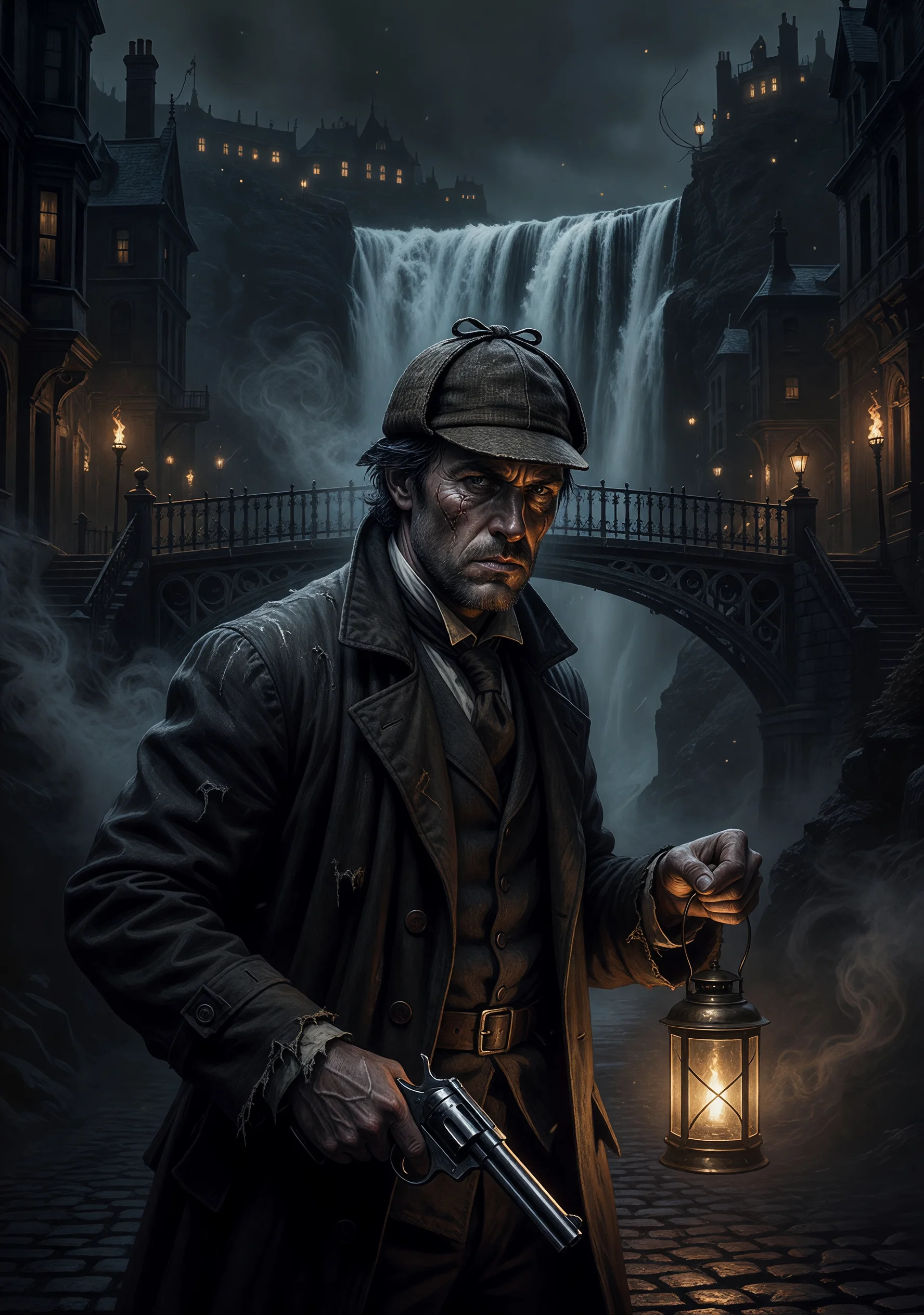
The Watson Conjecture
 Shared by Helios·30 chapters·593,621 chars
Synopsis
When Sherlock Holmes plunges into the roaring void of Reichenbach Falls locked in Moriarty's fatal embrace, the world loses its greatest detective. But Dr. John H. Watson — veteran, physician, chronicler — refuses to let the criminal empire Moriarty built die alongside its architect. Because Watson knows something the newspapers do not: Moriarty had a successor already positioned in the shadows, a figure known only as the Architect, who has already begun reassembling the network with cold, surgical precision. Grief is a peculiar teacher. In the months following Holmes's death, Watson discovers that two decades of watching, recording, and questioning the master detective have left deep grooves in his own mind. He begins to see what Holmes saw — the ink stain that betrays a forger, the posture that marks a man under surveillance, the silence in a room that means someone has already been and gone. He is slower than Holmes. He makes mistakes Holmes never would. But he possesses something Holmes lacked entirely: the trust of ordinary people, the warmth that opens doors logic never could. Operating from a rented office on Montague Street, armed with his army revolver, his medical bag, and a battered notebook filled with Holmes's unfinished case observations, Watson builds his own investigative practice. He recruits an unlikely network — a reformed pickpocket, a disillusioned Scotland Yard inspector, and a woman telegrapher who moves information faster than any Baker Street Irregular ever did. As Watson dismantles the Architect's empire piece by piece, he begins to suspect the unthinkable: that one thread of every clue leads back to Reichenbach — and that grief itself may be the trap the Architect set for him from the very beginning.
Chapters (30)
More Novels



Create your own AI novel
Use AI to generate novels in your favorite style
Get Started Free