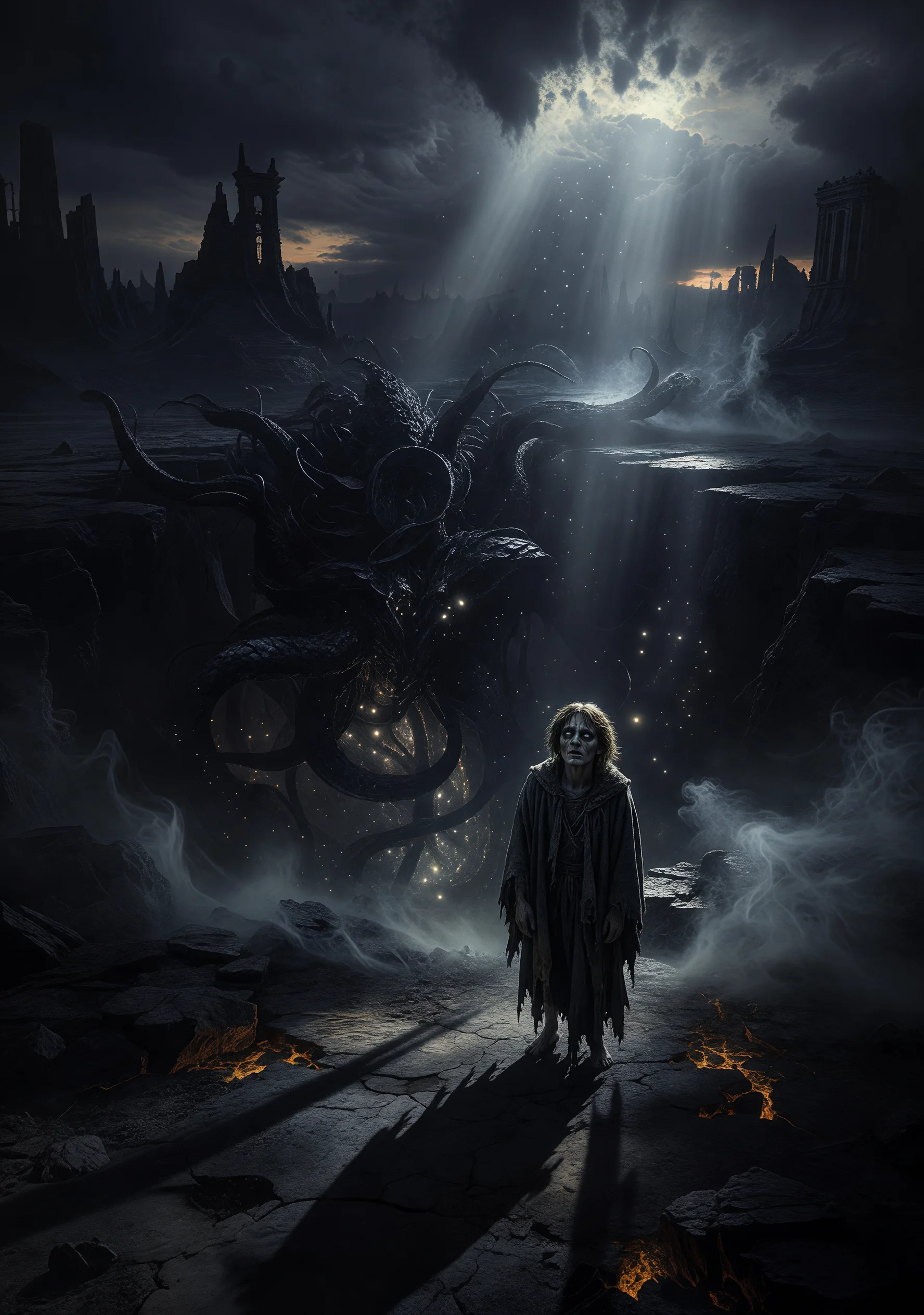
The Gnawing Dark Beneath the Blessed Realm
 Shared by Helios·19 chapters·366,259 chars
Synopsis
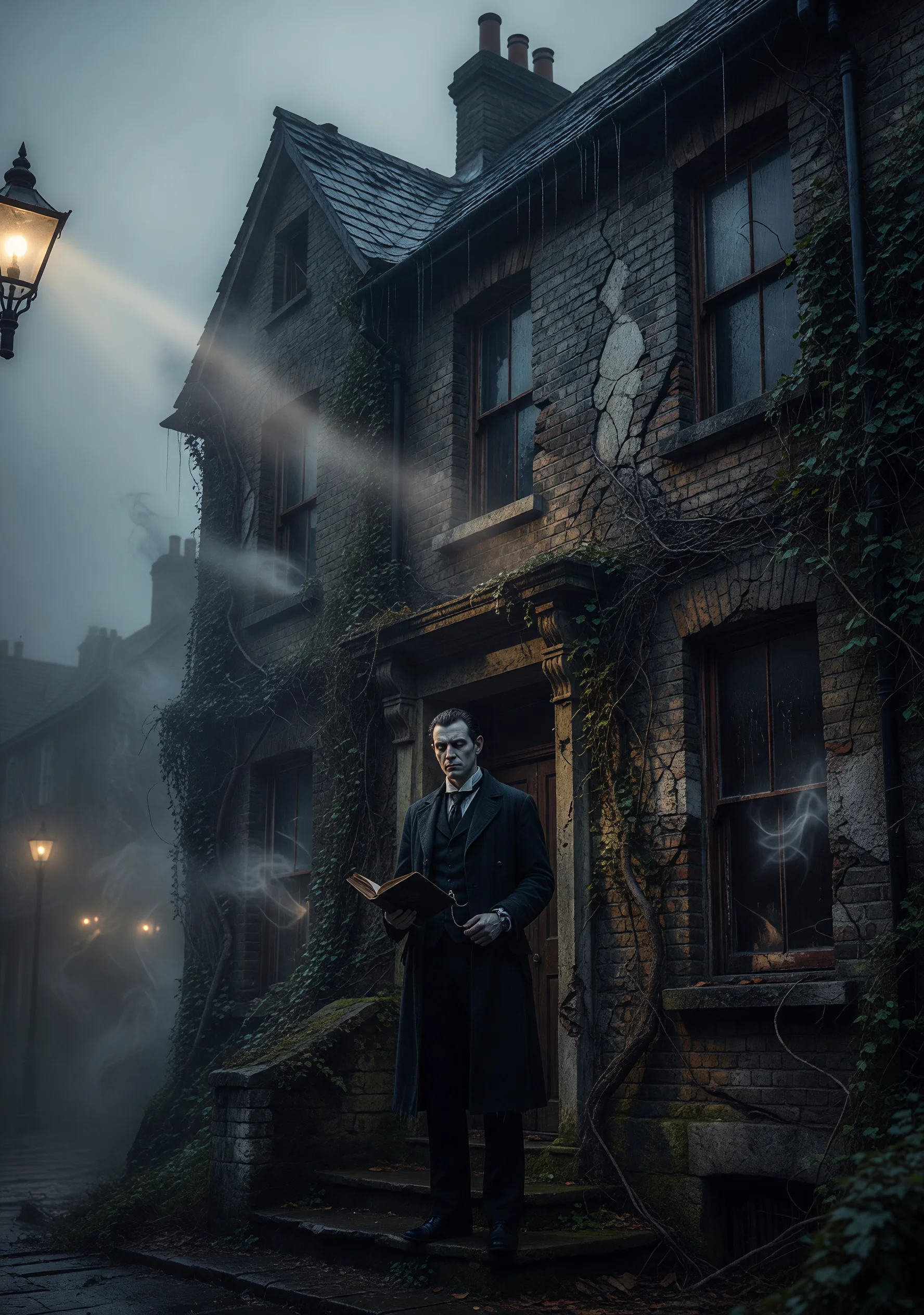
In the world of Andurath, a land men call ancient and holy, the great powers known as the Valar are not benevolent divine architects but merely the surface tremors of something immeasurably older — colossal entities of no name and no mercy, sleeping in the deepest strata of the earth, dreaming the world into fragile, temporary existence. The hobbits of the Mirelands are not quaint rustic folk but rather beings of peculiarly thin consciousness, poorly insulated against the whispers that bleed upward through stone and root. This thinness is precisely why Bilbo Greyfoot discovers the Ring in the dark of Morloch's Pit — it was never lost. It was waiting for a mind with walls too weak to refuse it. Frodo Greyfoot inherits not a weapon of power but an invitation. As he carries the Ring eastward toward the volcano called the Maw of the Sleeper, he does not feel corruption. He feels awakening — a slow, oceanic expansion of perception, the membrane between his consciousness and something boundless growing thinner with each mile. His companions — the ranger Arathas, the elf Calandris, the dwarf Thordun, the soldier Borvane — each begin to perceive it too: wrongness seeping from the landscape, ancient geometries beneath ruins, stars that rearrange when no one watches steadily. The Fellowship does not merely quest to destroy a weapon. They descend, layer by layer, into the realization that Andurath was never theirs, that the beauty of elvish cities and the solidity of dwarven halls are thin films stretched over a breathing, patient, incomprehensible darkness. The dark lord Auranthas is not a conqueror. He was the first man to fully wake up — and what looked back at him through that opening unmade him entirely. The horror of the novel is not destruction but revelation. Frodo reaches the Maw not to save the world but because the thing beneath it has been calling him home. The Ring does not fall. Frodo opens his eyes.
Chapters (19)
More Novels
Create your own AI novel
Use AI to generate novels in your favorite style
Get Started Free