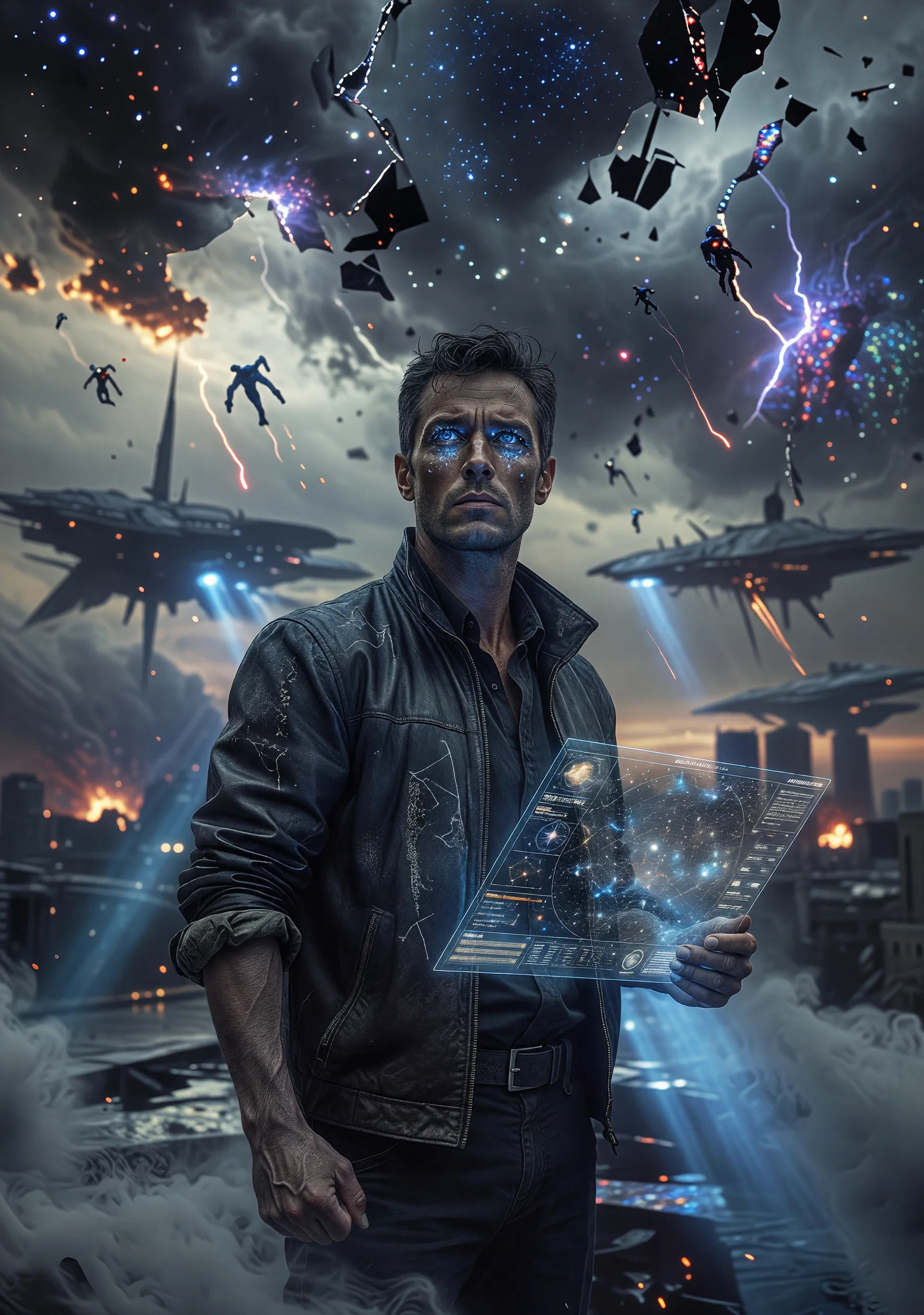
When the Stars Go Dark
 Shared by Helios·30 chapters·501,016 chars
Synopsis
The Kree Armada did not fall. On a gray Tuesday in November, the skies above every major city split open, and within seventy-two hours, Earth's mightiest defenders were scattered — some dead, some captured, some simply broken beyond repair. Carol Danvers, the woman who was supposed to be Earth's first and last line of defense, disappeared into deep space during the final battle, leaving behind only a burning crater and unanswered distress calls. Marcus Hale, an astrophysicist who had spent years quietly documenting superhero activity from the sidelines, watched the conquest from a rooftop in Boston. He was nobody — no powers, no armor, no divine bloodline. But he remembered everything. Ten years later, Earth exists under the Kree Occupation, its skies patrolled by warships, its cities reorganized into tribute zones. The Avengers are myth and propaganda — the Kree use their fallen image as proof that resistance is futile. But in the underground networks, a new generation of fighters has grown up knowing only occupation, and they are angrier and less afraid than their predecessors. Marcus, now a grizzled handler for resistance cells, receives a fractured transmission from deep space — a voice he recognizes. Carol is alive. She has been fighting alone in the outer systems, guilt-hollowed and war-scarred, convinced Earth is already gone. The reunion is not triumphant. It is two damaged people arguing about whether hope is a strategy or a suicide note. Together, they must decide whether the old world is worth reclaiming, or whether something entirely new must be built from the wreckage — and whether love forged before the fall can survive who they have each become.
Chapters (30)
More Novels
Create your own AI novel
Use AI to generate novels in your favorite style
Get Started Free